

Timeline
July - August 2023 (3 weeks)
My Role
UX Research, UI Design &
Redesigning
Team
Solo Student Project
“When you go to Starbucks and order a latte with soy milk, sugar, and extra foam – that’s good. But when the barista already knows what kind of coffee you like – that’s personalization. So, personalization is a step beyond.”
Problem Statement
Generic user experience that fails to address individual needs, goals, and preferences
Medito is one of the top-rated meditation apps.
The app was initially launched with a simple interface and a collection of meditation content. The app, which offers a uniform experience to all users, lacks the ability to cater to individual user needs, preferences, and goals. Moreover, imagine using the app for years and still having to go to the collections tab and search for your meditation pack manually every single time. It shouldn't be that complicated!
White Paper Research
Personalized content is currently the No. 1 expectation among mobile app users.
I began with online research, reading articles and research reports on meditation apps and personalization. I read all the reviews received by the app on play store and app store. Here are a few interesting insights I gained with my white paper research.
Most users would share personal information for personalized content. (57%)
Most users have enabled push notifications and reminders. (68%)
Users who engage with streaks are more likely to meditate daily, compared to those who don't. (60%)
User Interviews + Insights
"I want to make meditation a habit but every time I drop off after a few days"
I interviewed 10 people who use Medito or other meditation apps and intend to meditate in the future.
Interview questions I asked were:
1. What are your thoughts on meditation? Why do you meditate?
2. How often do you meditate? What is your goal?
3. How has the experience with meditation apps been for you?
4. What has worked well and what did not ?
5. Have you tried recommended meditations in the app? What do you think of it?
Main Insights gathered:
Users prefer recommended meditations as they don't have time to manually select (50%)
Many users have tried meditation apps before but often give up halfway, failing to experience the full benefits of meditation (60%)
Almost all users wanted to built a daily meditation practice (90%)
Most of users primarily use apps for guided meditations and soothing meditative sounds (70%)
Audit of the App
Why redesign the app?
I kicked things off by conducting a comprehensive audit of the app, delving into every nook. Along the way, I stumbled upon exciting chances to make things even more user-friendly.
Missing user profile page for meditation history and user insights.
No meditation session recommendations as per user's interests.

Lack of quick access of ongoing or previous meditation sessions.
Number of sessions and duration of meditation unavailable
No meditation reminders, notifications and motivating streak
The Solution
What can we do?
The thing about us humans is that we want to feel special. We want to feel that we are understood and that our needs will be met. That’s why users love personalization. It’s as though everything is tailored just for them. You may look it as,
Here are MVP solutions I came up with:
1. Design onboarding screens for collecting data about user’s interests to personalize their experience.
2. Personalize homepage as per needs and preference of the users.
3. Include meditation reminders and gamify using meditation streaks.
Design
Following the design process
After discovering MVP solutions for the app, I dived into the ideation phase where I sketched out multiple ways, I could tackle the issues. The main idea was ensuring I included MVP solutions while maintaining the cozy sense of familiarity for existing users.

Rapid Sketch iterations

Ideation Sketch
Iterations & more iterations
Based on feedback received from my tutors, I continually iterated for a span of a week. The challenge was to include personalization features while ensuring the minimalistic vibe of the organization.
V1


Quick categories not handy for users.
Favorites tab in navigation bar provides no value.
V2

Like button provides no value at homepage.
Icon used for Explore tab resembles "menu".
Quote section not organized.
MVP

Final

Number of sessions in each course is not available for decision making.
The Redesigned app
Mindfulness tailored for you!
To ensure a seamless experience for users, I came up with several interactions that correspond with each one. Here is how things work in the proposed app design.
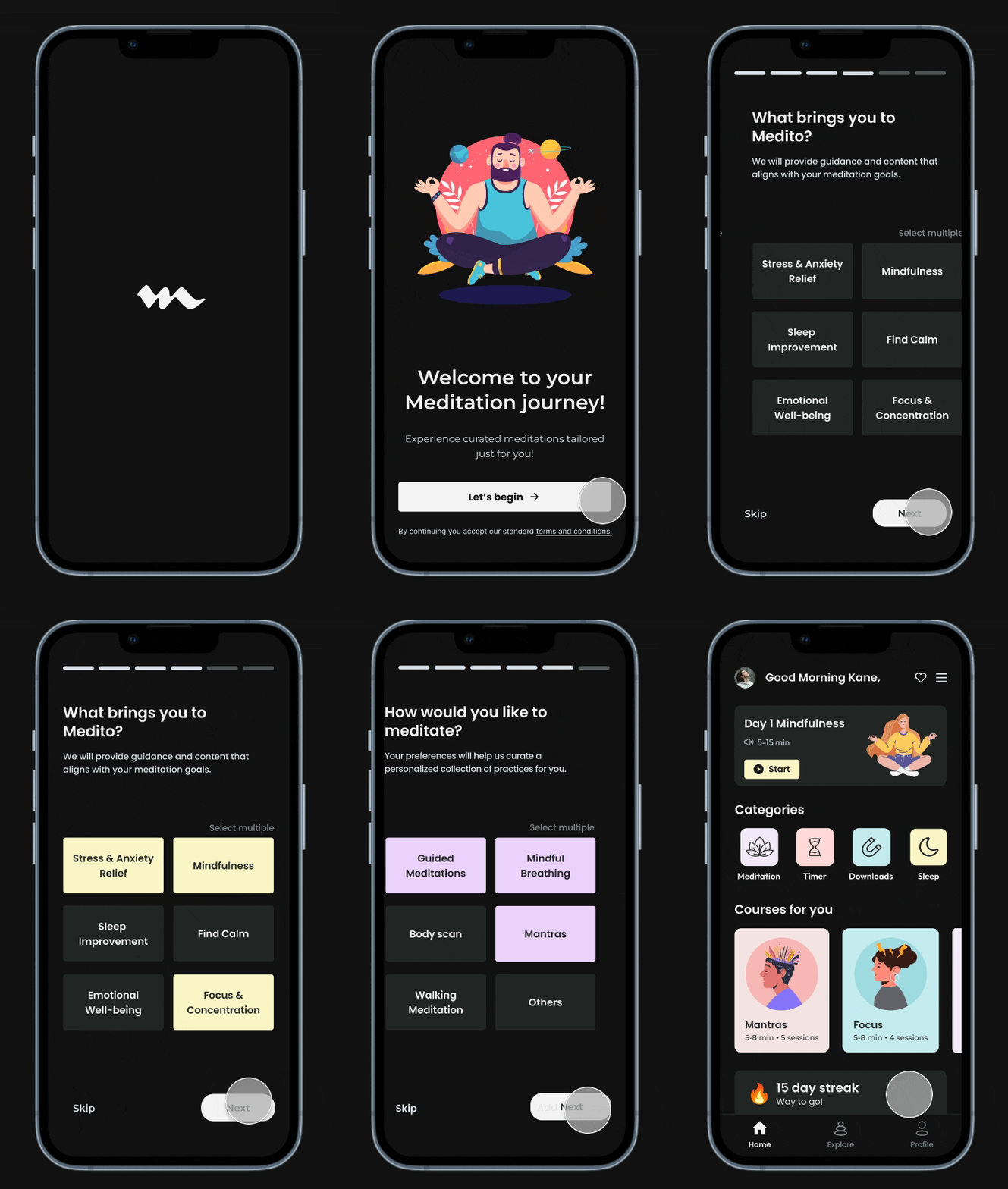
01. User Onboarding
An onboarding experience with micro animations, gently gathering important user insights for a personalized app adventure while maintaining transparency about data collection.
02. Personalized Homepage
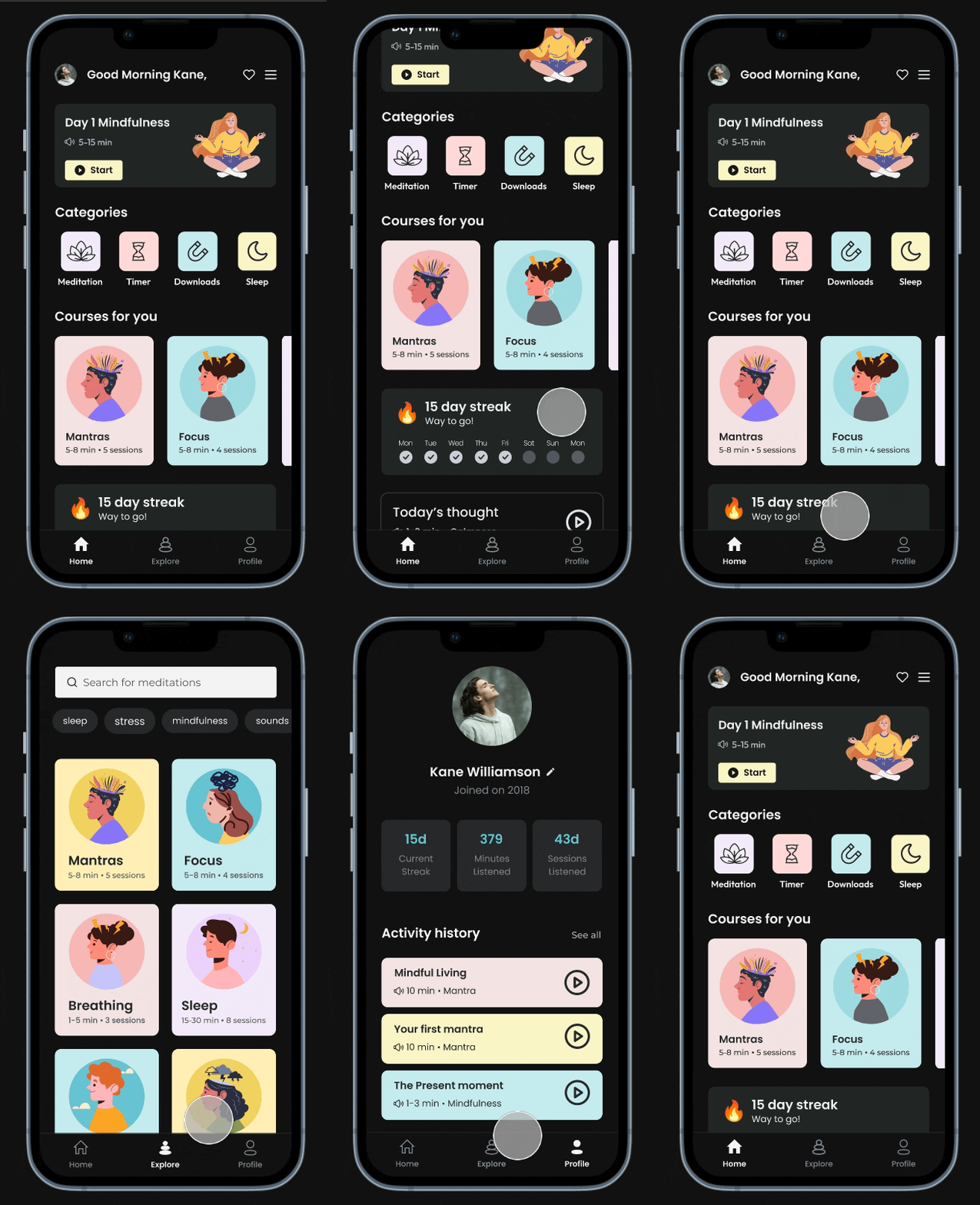
Homepage as per the insights received during onboarding.
Added a dedicated profile page, giving users control over their meditation journey, and to manage notifications and reminders at their fingertips.
03. Progress Tracking
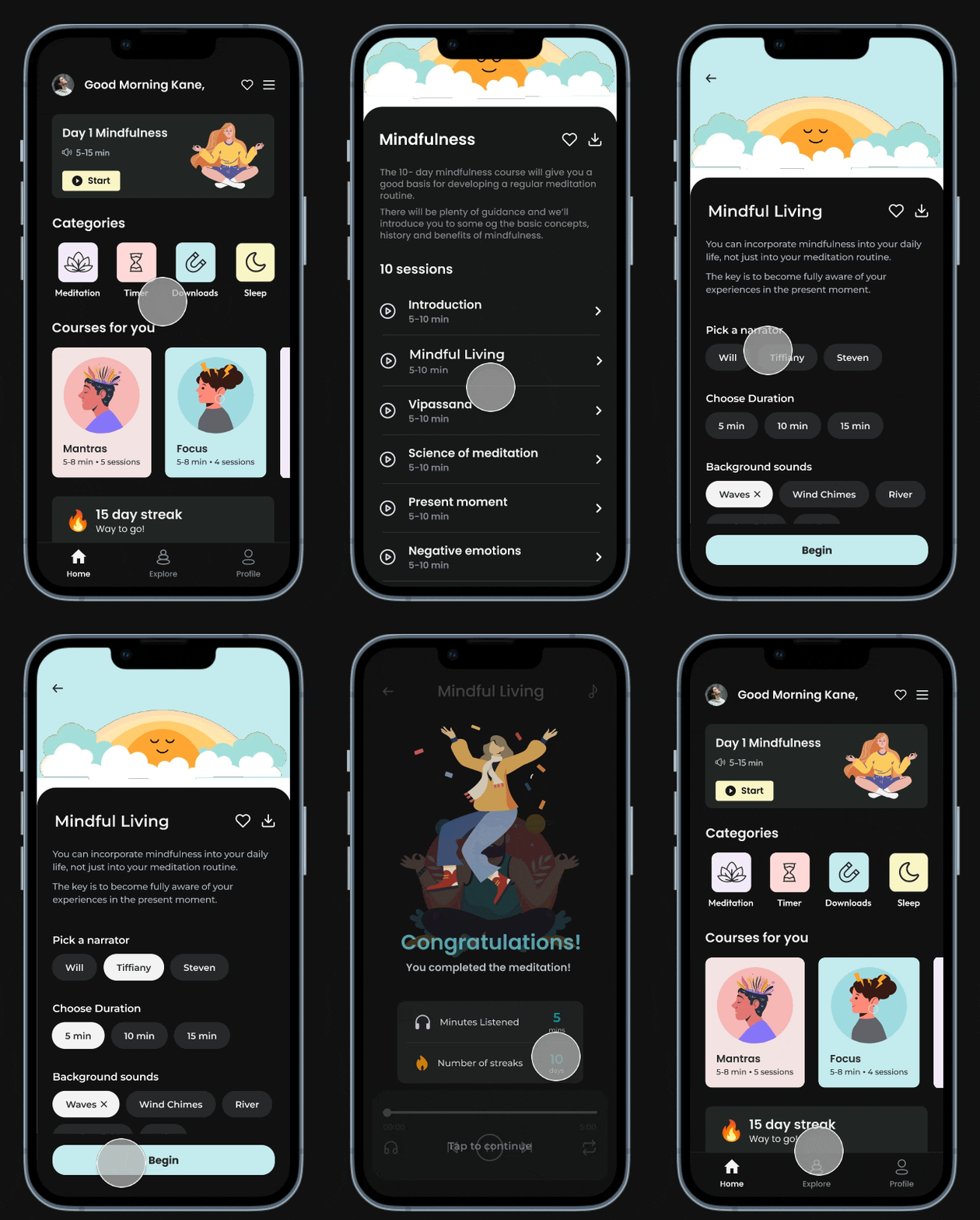
Included meditation streaks to form habit, complemented by personalized meditation reminders based on user preferences.
Your favorite meditations can now be Wishlisted for quick access in future.
UI Elements
The Style Guide
Typography & Colors
I used the existing colors to maintain consistency and also retain and reflect the personality of the Medito. I chose the Poppins font since it has a clean and modern style that creates a sense of calm and simplicity. The smooth curves and open spaces of the letters give the app a soothing vibe, which is just what you need during meditation.
#18181A
#2C2C2E
#2C2C2E
#F3F3F3
#F9F5C6
#C6EAEF
#F4E9FA
#FFD8D8
Typeface: Poppins
Aa
Regular
Medium
Semi-Bold
Button
Final screens
The Final Look!

Conclusions
What didn’t go well and my learnings.
I have been using Medito app for the past five years as my go to meditation app, to work on its betterment was an amazing experience. Here is what I'd do differently next time:
1. Don’t design the app for yourself -
One of my big misconceptions was assuming that being a user myself meant I could read minds and know exactly what everyone else wanted. It's crystal clear now that including the user's perspective every step of the way is pure gold.
2. Considering Development-
Best feedback from my mentors was before coming up with complicated designs it is important to consider developers and the time constraints to bring project to live.
3. Iterations are a part of each stage of design process-
The initial worry over making loads of changes after feedback was real. only to realize it is a very important and never-ending part of the design process. “No feedback, no growth”